Hazardous Waste Regulations 2025: A Practical Guide for South Wales Contractors
Published March 2026 · 8 min read · James Grab & Tipper Hire
Hazardous waste regulation is one of the most misunderstood areas of construction compliance. Get it wrong and you face unlimited fines, criminal prosecution, and environmental liability. This guide covers everything South Wales contractors need to know.
What is Hazardous Waste?
Under the Hazardous Waste Regulations 2005 (England and Wales) and the Waste Framework Directive, hazardous waste is any waste that displays one or more hazardous properties — including toxicity, corrosivity, flammability, infectivity, and ecotoxicity.
On South Wales construction sites, the most commonly encountered hazardous wastes are:
- Contaminated soils — from brownfield sites, petrol stations, former industrial land, and sites with a history of chemical use
- Asbestos-containing materials (ACMs) — from demolition of pre-2000 buildings
- Lead-based paint — from stripping older buildings
- PCB-containing materials — from older electrical equipment and fluorescent light fittings
- Oils and solvents — from plant maintenance, industrial processes, and storage tank removals
- Fluorescent tubes and batteries — common on refurbishment projects
Your Legal Duties as a Waste Producer
If your construction activities generate hazardous waste, you have specific legal duties under the Duty of Care (Environmental Protection Act 1990) and the Hazardous Waste Regulations 2005:
- Correct classification: You must correctly identify and classify hazardous waste using the European Waste Catalogue (EWC) codes. Misclassification — even accidental — can constitute an offence.
- Use a licensed carrier: You must only allow upper-tier Environment Agency registered waste carriers to transport hazardous waste. You can verify registration at environment.data.gov.uk.
- Complete consignment notes: Every hazardous waste movement requires a consignment note signed by the producer, carrier, and receiving facility. These must be retained for three years.
- Dispose at a licensed facility: Hazardous waste must go to a facility with the appropriate environmental permit to receive it.
Consignment Notes Explained
The hazardous waste consignment note is the key document in every hazardous waste movement. It must include:
- Full details of the waste producer (name, address, EA registration if applicable)
- EWC code and description of the waste
- Estimated quantity and physical form
- Details of the carrier (name, registration number)
- Details of the consignee (receiving facility, permit number)
- Declaration by the producer that the information is correct
The carrier signs the note on collection and the receiving facility signs on receipt. All parties retain copies for three years. Electronic consignment notes are now accepted and make compliance record-keeping much simpler.
Contaminated Soil: The Biggest Risk on South Wales Sites
South Wales has a complex industrial legacy. Former steel works, coal mines, chemical plants, and petrol stations are spread throughout the region — and many have been partially or fully redeveloped over the decades. Ground contamination from these historical uses can be encountered unexpectedly on sites that appear clean on the surface.
If a Phase 1 desk study or Phase 2 ground investigation identifies contamination on your South Wales site, you must:
- Ensure excavated contaminated soil is classified correctly as hazardous waste
- Appoint a licensed hazardous waste carrier for all contaminated soil movements
- Complete consignment notes for every load
- Ensure disposal at a facility licensed to accept hazardous excavation waste
Penalties for Non-Compliance
The penalties for hazardous waste offences in England and Wales are severe:
- Magistrates court: Up to £50,000 fine and/or 12 months imprisonment per offence
- Crown court: Unlimited fines and up to 5 years imprisonment
- Fly-tipping hazardous waste: Is treated as one of the most serious environmental offences and is prosecuted vigorously by Natural Resources Wales and the Environment Agency
Directors and company officers can be personally liable where an offence is committed with their consent, connivance, or neglect.
How We Help South Wales Contractors
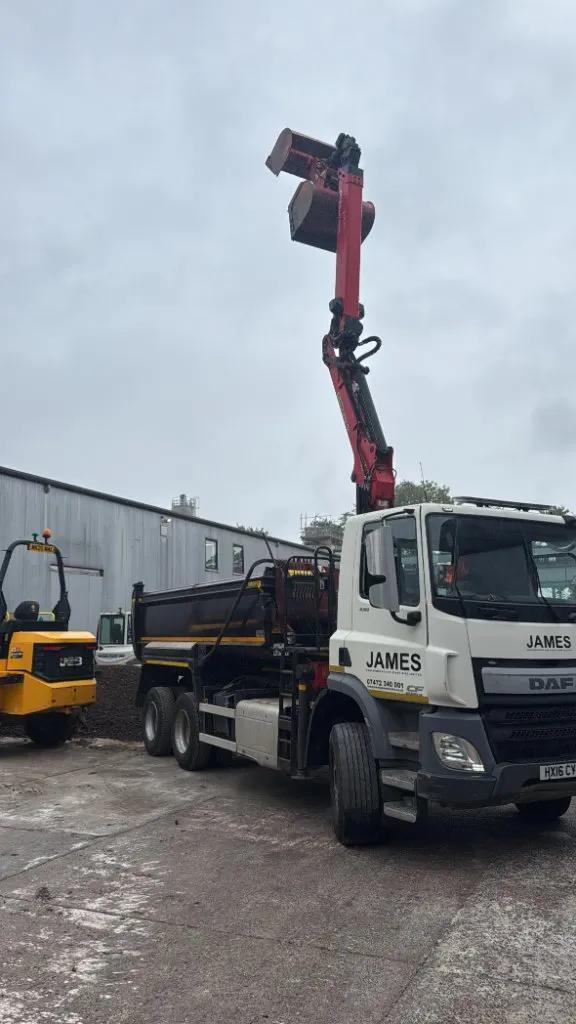
James Grab and Tipper Hire is an upper-tier Environment Agency registered waste carrier covering all standard and hazardous waste types. For South Wales contractors dealing with contaminated soils and hazardous demolition arisings, we provide:
- Correct EWC classification advice based on site investigation reports
- Licensed transport with full consignment documentation
- Disposal at appropriately permitted hazardous waste facilities
- Digital copies of all documentation for your compliance records
Need Licensed Hazardous Waste Removal in South Wales?
Call 01495 820164 for expert advice and a free quote. We handle all the paperwork.